A sore jaw, a click when you open wide, a headache that will not leave. These three feelings often belong to the same problem. The problem has a long name: temporomandibular disorder. Most people shorten it to TMD. The joints in front of your ears that open and close your jaw are the TMJs. When those joints, or the muscles that move them, are sore, stuck, or noisy, you have TMD.
If your jaw has been hurting for more than a few days, a specialist prosthodontist can help. Our team at Dental Specialists of Turramurra treats TMD every week and looks at the jaw, bite, and muscles behind the pain.
What does jaw pain from TMD feel like?
TMD pain shows up in the jaw, in the face, and sometimes in places that surprise you. The 4 most common signs are:
- A dull ache or sharp pain in one or both jaw joints, right in front of the ear.
- A click, pop, or grating sound when you open your mouth or chew.
- The jaw feeling stuck, locked, or "off track" when you yawn.
- A headache that starts in the temples and spreads across the forehead.
Some people also feel earache, toothache, or a tired face at the end of the day. None of these signs alone prove TMD. A specialist assessment confirms it.
What causes TMD?
TMD usually has more than one cause, and the cause is different for every person. The 4 things our specialists look for are:
- Clenching or grinding the teeth , especially at night. Most people do not know they do this.
- A bite that does not line up well , so some teeth take more force than they should.
- Joint wear , where the small disc inside the TMJ has moved or thinned.
- Stress and posture , which tighten the jaw and neck muscles through the day.
Two of these together is common. The treatment plan has to match the cause, not just the symptom.
How does a specialist diagnose jaw pain?
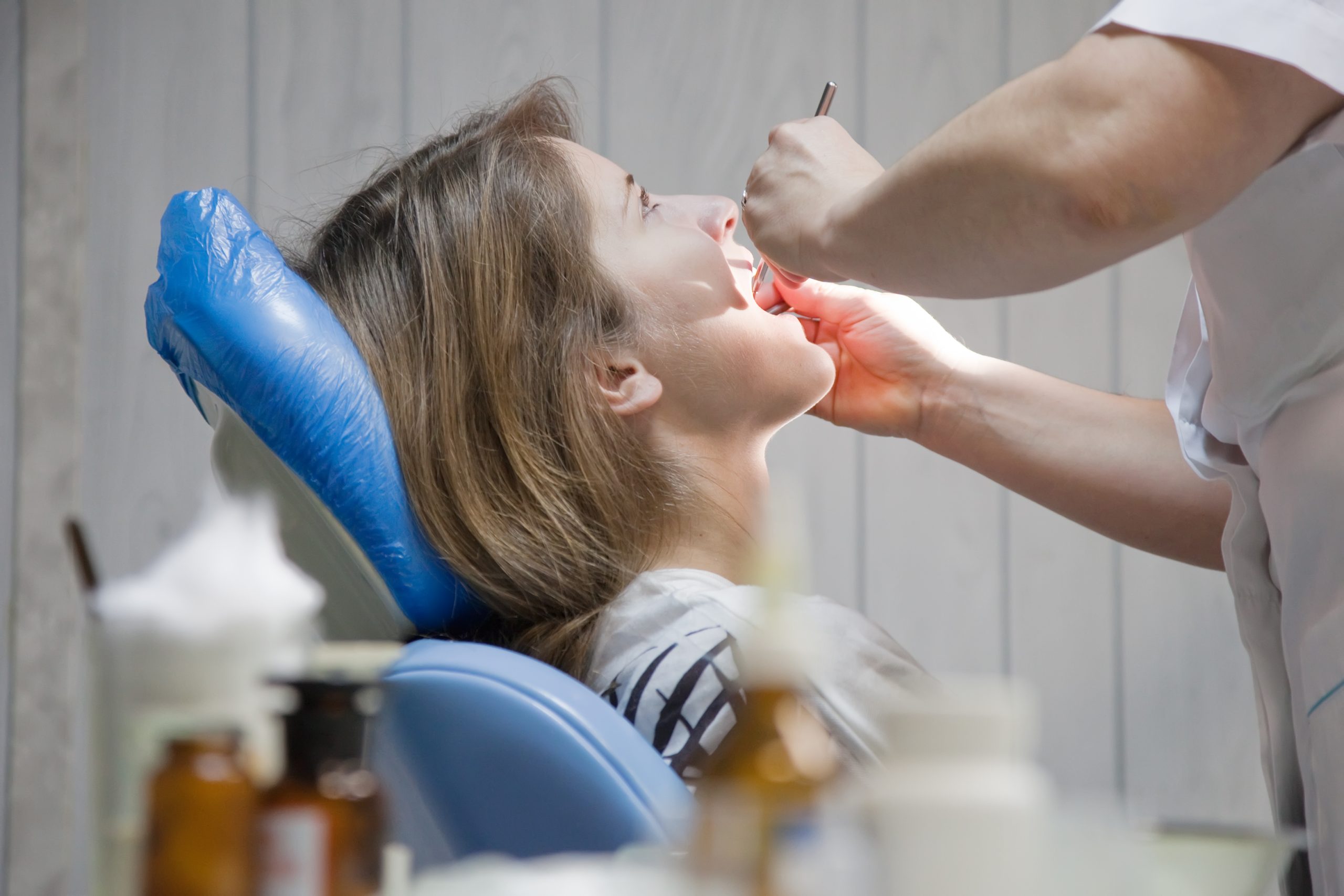
A TMD assessment looks at the joints, the muscles, the bite, and your day-to-day story. It usually takes 30 to 45 minutes. The specialist will:
- Ask when the pain started, when it gets worse, and what makes it better.
- Feel the jaw joints and the muscles while you open, close, and move side to side.
- Listen for clicks or grating.
- Check how your teeth come together.
- Look at posture and neck tension.
Sometimes an x-ray or 3D scan is needed to see the joint disc or the bone. Our team only suggests scans if the picture is not yet clear.
What are the treatment options for TMD?
TMD treatment starts with simple, reversible options first. Surgery is a last step, not a first one. The 4 most common treatments are:
If the bite is the main driver of the problem, orthodontic treatment or restorative work may be planned for the longer term. Our prosthodontist, Dr Anthony Au, will walk you through every option and the order they make sense in. Nothing is locked in on the first visit.
What happens at a first visit to our Turramurra clinic?
A first TMD visit is a careful look and a clear plan, not a procedure. Here is what to expect:
- A warm welcome in our lounge with tea, espresso, or a herbal infusion.
- A full chat about your jaw, your headaches, your sleep, and your day.
- A hands-on check of the joints, the muscles, and the bite.
- A short list of the next steps, in plain language, before you leave.
If you are nervous, we have a few things that help. We use a computerised anaesthetic unit that numbs the area drop by drop through a tiny point, with no conventional needle. We offer aromatherapy eye packs and virtual reality DVD viewers during longer visits, and premedication or inhalational analgesia for anxious patients.
When should you see a specialist about jaw pain?
You should see a specialist if any of these 5 things are true for you:
- Jaw pain has lasted more than 2 weeks, or keeps coming back.
- Your jaw clicks, locks, or feels stuck when you open wide.
- You wake with a sore jaw, sore teeth, or a morning headache most days.
- You cannot eat hard or chewy foods without pain.
- A partner has heard you grind your teeth at night.
A specialist prosthodontist is trained to spot the difference between jaw muscle pain, joint pain, and tooth pain. That difference is what changes the treatment plan.
How to get help from our Turramurra team
If jaw pain is part of your week, the first step is a TMD assessment. Our practice sits on Sydney's upper North Shore, and we see patients from Turramurra, Wahroonga, Warrawee, Pymble, Gordon, Killara, Lindfield, Roseville, St Ives, and Hornsby.
- Practice : Dental Specialists of Turramurra
- Address : Suite 1-2 / 1335 Pacific Highway, Turramurra NSW 2074
- Phone : (02) 9488 7455
- Hours : Monday to Friday, 9:00 am - 5:00 pm
To learn more about how we treat jaw pain day to day, see our Jaw Pain and TMD Treatment page. For a deeper look at the condition, the causes, and self-help steps, our Jaw Pain Information hub is a good next read.
Frequently Asked Questions
Can TMD go away on its own?
TMD often settles with simple care, but it tends to come back if the cause is not fixed. A night guard, jaw exercises, and stress management help most people feel better within weeks. A specialist confirms the joint is healthy.
Is TMD the same as TMJ?
No. TMD is the disorder. TMJ is the joint itself. You have two TMJs, and you can have TMD in one or both.
Will I need surgery for my jaw pain?
Most TMD patients never need surgery. Splints, exercises, bite adjustment, and medication review help the great majority. Surgery is reserved for clear structural problems that have not responded to other care.
Does private health cover TMD treatment?
Cover depends on your extras and your fund. We accept BUPA, Medibank, and other major funds. We also offer payment plans through Afterpay, DentiCare, and humm.
Can a chemist night guard work as well as a specialist one?
A chemist guard is a soft pad. A specialist occlusal splint is a thin, hard, custom-fit appliance. The specialist version holds the jaw in a precise relaxed position. The chemist version can sometimes make clenching worse.